Table of Contents
Under AS 28.35.030, a first DUI in Alaska is a class A misdemeanor with mandatory minimums of 72 consecutive hours of imprisonment, a $1,500 fine, a 90-day license revocation and six months of ignition interlock after you regain the privilege to drive. Each prior conviction within 15 years raises the minimums, up to 360 days and $7,000. A DUI becomes a class C felony if you have two or more prior convictions within the 10 years before the new offense (and since January 1, 1996), which means a third DUI inside ten years is a felony, with at least 120 days, a $10,000 fine, 60 months of interlock and permanent license revocation, subject to restoration.
Outside a court-ordered treatment program under AS 28.35.028, the judge cannot go below these minimums. This page is the penalties reference. For the separate DMV process that starts at arrest, see our DUI license revocation guide; for how charges are challenged, see our DUI defense guide. This article is general information, not legal advice.
Table of Contents
- ➤ What Counts as DUI in Alaska
- ➤ Alaska DUI Penalties by Offense
- ➤ What Comes With Every DUI Conviction
- ➤ Felony DUI in Alaska
- ➤ The Lookback Periods at a Glance
- ➤ Refusing the Breath Test
- ➤ License Revocation and the Limited License
- ➤ Municipal Charges and Other Consequences
- ➤ Frequently Asked Questions
- ➤ Talk to a BFQ Law Alaska Attorney
What Counts as DUI in Alaska
AS 28.35.030(a) makes it a crime to operate or drive a motor vehicle, or operate an aircraft or watercraft:
- while under the influence of alcohol, an inhalant or any controlled substance, alone or in combination; or
- with a blood or breath alcohol concentration of 0.08 or more, as determined by a chemical test taken within four hours after driving.
Either way of proving the offense is enough. The same penalty schedule applies to refusing a chemical test after a DUI arrest under AS 28.35.032, which is a separate crime.
Alaska DUI Penalties by Offense
“Previously convicted” means convicted in Alaska or another jurisdiction within the 15 years before the new offense of DUI, chemical test refusal, or commercial-vehicle DUI. Convictions from a single transaction and single arrest count as one (AS 28.35.030(w)(4)).
| Prior convictions (15-year lookback) | Minimum jail | Minimum fine | Minimum license revocation | Minimum ignition interlock after relicensing |
|---|---|---|---|---|
| None (first offense) | 72 consecutive hours | $1,500 | 90 days | 6 months |
| One | 20 days | $3,000 | 1 year | 12 months |
| Two (if not a felony) | 60 days | $4,000 | 3 years | 18 months |
| Three (if not a felony) | 120 days | $5,000 | 5 years | 24 months |
| Four (if not a felony) | 240 days | $6,000 | 5 years | 30 months |
| More than four (if not a felony) | 360 days | $7,000 | 5 years | 36 months |
Jail, fine and interlock minimums come from AS 28.35.030(b)(1)(A)–(F). License revocation minimums come from AS 28.15.181(c). These are floors: a misdemeanor DUI carries up to one year in jail (AS 12.55.135(a)) and a fine of up to $25,000 (AS 12.55.035(b)).
Why “if not a felony” matters. Because the misdemeanor lookback is 15 years and the felony lookback is 10 years, a driver with two priors can still be a misdemeanor offender, but only if one or both of those priors is more than 10 years old.
What Comes With Every DUI Conviction
Beyond jail and fines, AS 28.35.030 adds:
- No suspended sentences below the minimum. The court may not suspend imposition of sentence, and may grant probation only if you serve the minimum jail and pay the minimum fine ((b)(2)).
- Ignition interlock cannot be waived for an alcohol-based DUI ((b)(2)(C)), except that the court must waive it when you drive in a community on the DMV’s published list of exempt communities under AS 28.22.011(b) (subsection (t)).
- Alcohol Safety Action Program (ASAP). You must complete ASAP screening, evaluation, referral and program requirements, or an approved treatment facility’s, where available ((h)). Failing to comply can lead to imposition of suspended jail time and suspension of your license until you comply ((j)).
- Cost of imprisonment. You pay the state’s cost of your jail time, capped at $2,000, and unpaid amounts can be taken from your Permanent Fund Dividend ((k)).
- Emergency response costs. If the DUI contributed to a crash, the court must order you to pay the reasonable cost of the emergency services that responded, unless you or your insurer already paid ((m)).
- Vehicle forfeiture. The court may order forfeiture of the vehicle for a misdemeanor DUI ((b)(3)) and must for a felony ((n)(5)).
Where a first-offense sentence is served. The 72-hour minimum for a first offense must be served at a community residential center or by electronic monitoring at a private residence, or at another appropriate place if those are not available. Sentences for a second offense or more may be served that way if the commissioner of corrections approves, and a second offense also requires at least 160 hours of community service ((k)).
Fine credit for the interlock. The court may reduce the required fine by the cost of the ignition interlock device ((g)).
Felony DUI in Alaska
Under AS 28.35.030(n), DUI is a class C felony if you have been previously convicted two or more times since January 1, 1996, and within the 10 years before the new offense, or if you received felony DUI or felony refusal punishment within the last 10 years.
| Felony DUI | Requirement |
|---|---|
| Minimum jail | 120 days with two priors; 240 days with three; 360 days with four or more |
| Minimum fine | $10,000 |
| Ignition interlock | At least 60 months after you regain the privilege to drive |
| License | Permanently revoked, subject to restoration under subsection (o) |
| Vehicle | Mandatory forfeiture, subject to remission |
| Registration | Revocation of registration for any vehicle registered in your name |
| Maximum | Up to five years; presumptive range of 0 to 2 years for a first felony conviction (AS 12.55.125(e)); fine up to $50,000 (AS 12.55.035(b)) |
The court must order an ASAP evaluation before sentencing on a felony DUI ((h)). A felony conviction also carries the collateral consequences of any felony.
Restoring a license after felony DUI. Under AS 28.35.030(o), on request the DMV may restore a license revoked for felony DUI after at least 10 years if you have no driving-related criminal offense or felony in the preceding 10 years and provide proof of financial responsibility. It must restore the license if you drove successfully for three years on a felony limited license under AS 28.15.201(g), completed a court-ordered or approved treatment program, have no new DUI or refusal conviction, are otherwise eligible under AS 28.15.211, and provide proof of financial responsibility. These options are not available if the revocation was ordered as permanent under subsection (u) (a third felony DUI) or (v) (a new DUI after a restoration), or if the case also involved a homicide or assault conviction listed in the statute.
The Lookback Periods at a Glance
| Rule | Window | Source |
|---|---|---|
| Prior counts toward misdemeanor minimums | 15 years before the new offense | AS 28.35.030(w)(4) |
| Prior counts toward the felony threshold | 10 years before the new offense, and since Jan. 1, 1996 | AS 28.35.030(n) |
| Felony refusal threshold | Same 10-year rule | AS 28.35.032(p) |
Out-of-state convictions count if the other law has similar elements, even if that law uses a lower alcohol limit. Prior refusal convictions count as priors for DUI sentencing, and prior DUIs count for refusal sentencing.
Refusing the Breath Test
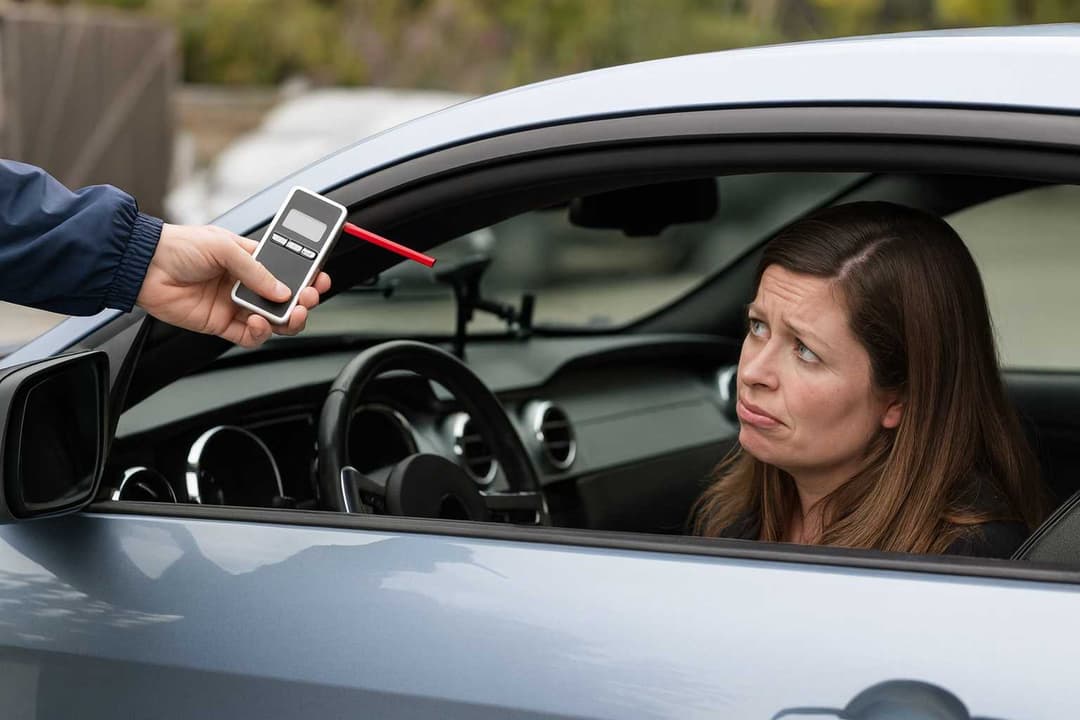
Refusing a chemical test after a lawful DUI arrest is its own class A misdemeanor under AS 28.35.032(f). The minimum jail, fine and interlock schedule in AS 28.35.032(g) mirrors the DUI table above, and the refusal becomes a class C felony under AS 28.35.032(p) on the same 10-year, two-prior rule. A refusal is also admissible as evidence in the DUI case ((e)). Refusal has a practical downside for driving: a limited license under AS 28.15.201(d) is available only when the revocation was for a misdemeanor DUI conviction, “not for a violation of AS 28.35.032.”
License Revocation and the Limited License
Two revocations can run from one arrest: the DMV’s administrative revocation under AS 28.15.165, which follows a test result of 0.08 or more or a refusal, and the court’s revocation on conviction under AS 28.15.181(c). The administrative revocation uses the same minimum periods, and the court’s revocation may run concurrently or consecutively.
The temporary license on the officer’s notice expires seven days after it is delivered, and you must request administrative review within seven days or the right is generally waived (AS 28.15.166(b)). Our license revocation guide walks through that hearing.
For a misdemeanor DUI, a court or the DMV may grant a limited license under AS 28.15.201(d) if, among other conditions:
- you have no prior conviction and 30 days of the revocation have passed, or you have a prior conviction and 90 days have passed;
- you use an ignition interlock on every vehicle you drive (outside exempt communities);
- you are enrolled and in compliance with ASAP; and
- you provide proof of insurance.
Municipal Charges and Other Consequences
Many Anchorage DUI arrests are charged under the Municipality of Anchorage’s own code rather than state law. The municipal offense, Anchorage Municipal Code 9.28.020, uses the same minimum jail and fine schedule as the state table above, requires license revocation under AS 28.15.181 and applies the ignition interlock requirements of state law. It adds terms of its own: the court must impose more than the minimum sentence unless mitigating circumstances exist, and if you have an interest in the vehicle used in the offense, it is impounded for 30 days on a first offense or forfeited to the municipality if you have a prior conviction. Commercial driver’s license holders also face separate federal disqualification rules, and a DUI that injures someone can lead to a civil claim; see our guide to civil claims after drunk driving crashes.
Frequently Asked Questions
Is a first DUI in Alaska a felony? No. A first DUI is a class A misdemeanor with mandatory minimums of 72 consecutive hours, a $1,500 fine, a 90-day revocation and six months of ignition interlock.
When does a DUI become a felony in Alaska? When you have two or more prior DUI or refusal convictions within the 10 years before the new offense (and since January 1, 1996), or prior felony DUI or refusal punishment within 10 years. A third DUI within 10 years is a felony.
How far back does Alaska look at prior DUIs? Fifteen years for the misdemeanor sentencing minimums, and ten years for the felony threshold.
Do I have to spend 72 hours in jail for a first DUI? You must serve at least 72 consecutive hours, but the statute directs that a first-offense sentence be served at a community residential center or by electronic monitoring at home, or another appropriate place if those are unavailable. You pay the cost, up to $2,000.
Can I get a work license after a DUI? Possibly. After 30 days (first offense) or 90 days (with a prior) of revocation, a limited license may be available for a misdemeanor DUI with interlock, ASAP compliance and proof of insurance. It is not available for a refusal-based revocation.
Talk to a BFQ Law Alaska Attorney
Alaska’s DUI penalties are set by statute, but which tier applies depends on dates and details: how old each prior is, whether an out-of-state conviction has similar elements, whether two charges arose from one arrest, and whether the seven-day DMV deadline has already started. Those questions change the minimum sentence and whether the case is a felony.
Read about our DUI defense practice and reach us through our contact page. Nothing here promises an outcome, and every case depends on its own facts.
This post is general information, not legal advice.
Sources: AS 28.35.030 · AS 28.35.032 · AS 28.35.028 · AS 28.15.165 · AS 28.15.166 · AS 28.15.181 · AS 28.15.201 · AS 12.55.035 · AS 12.55.125 · AS 12.55.135 · Anchorage Municipal Code 9.28.020
Need Legal Help?
If you have questions about criminal defense or need legal representation, contact BFQ today for a free consultation.
Schedule Free ConsultationLearn more about our Criminal Defense practice.
Want to see more of our guides in your Google results?