Table of Contents
Two cases from one arrest. Every DUI arrest in Alaska sets two independent legal clocks running at the same time. One is criminal, filed by the State of Alaska in the Anchorage District Court or another district court under AS 28.35.030. The other is administrative, handled by the Alaska Division of Motor Vehicles under AS 28.15.165, and it will revoke your license whether or not you are ever convicted of a crime. Most drivers do not realize they only have seven calendar days to protect the administrative side.
A specialized area of law. Alaska DUI defense sits at the intersection of criminal procedure, administrative law, forensic science, and federal regulation. The DMV hearing operates on rules of evidence looser than the criminal courts. The chemical test result can be attacked on foundation, calibration, and operator training. Ignition interlock, limited license, SR-22, ASAP participation, and CDL disqualification each carry their own timelines. Missing any of them can add years to a revocation that should have been months.
BFQ Law Alaska represents drivers facing DUI charges from our Anchorage office at 550 W. 8th Avenue and serves the Third Judicial District, the Matanuska-Susitna Borough, the Kenai Peninsula, and communities across the state. If you have been arrested for driving under the influence or received a DMV notice of revocation, reach us through our contact page or by emailing secretary@BFQLaw.com. Our criminal defense department, led by Eric Burkett, handles DUI matters at every stage from the initial stop through appeal.
Table of Contents
- ➤ How an Alaska DUI Arrest Triggers Two Separate Cases
- ➤ The DMV Administrative License Revocation (AS 28.15.165)
- ➤ The Seven-Day Deadline to Request a DMV Hearing
- ➤ What Happens at the DMV Hearing
- ➤ Implied Consent, Breath Tests, and Refusal (AS 28.35.032)
- ➤ The Criminal DUI Case Under AS 28.35.030
- ➤ Misdemeanor DUI Penalties by Offense Number
- ➤ Felony DUI Under AS 28.35.030(n)
- ➤ Ignition Interlock Requirements (AS 12.55.102)
- ➤ Limited Licenses and Hardship Driving Permits
- ➤ Commercial Driver's License Consequences
- ➤ DUI and JBER: Military and Federal Consequences
- ➤ Prior Convictions and the Alaska Look-Back Period
- ➤ Defenses an Alaska DUI Lawyer May Raise
- ➤ The Anchorage District Court Process
- ➤ What to Do in the First Seven Days
- ➤ Frequently Asked Questions
- ➤ Contact BFQ Law Alaska
How an Alaska DUI Arrest Triggers Two Separate Cases
An Alaska DUI arrest is not one case — it is two. The criminal case is filed by the State of Alaska prosecutor and charges the underlying offense of operating a motor vehicle while under the influence of alcohol or a controlled substance, or with a blood or breath alcohol concentration of 0.08 percent or higher under AS 28.35.030(a). The administrative case is opened by the Alaska Division of Motor Vehicles under AS 28.15.165 the moment the arresting officer submits a sworn report and the chemical test result to the DMV. The two proceedings run in parallel and can reach opposite conclusions.
A revoked license without a conviction. Drivers are routinely surprised to learn that the DMV can — and often does — revoke their license administratively even if the criminal charge is later dismissed or reduced. That is because the DMV applies a lower burden of proof, applies less strict rules of evidence, and considers a narrower set of issues than the criminal court. An acquittal in court does not automatically restore your license, and losing at the DMV does not automatically convict you in court. You need to defend both.
Federal and collateral consequences. Beyond the state case and the DMV, a DUI can trigger consequences with the Federal Aviation Administration for pilots, with the Federal Motor Carrier Safety Administration for CDL holders, with any professional licensing board (nursing, teaching, medicine, law), with the U.S. Coast Guard for merchant mariners, and with the security clearance office for military members assigned to Joint Base Elmendorf-Richardson. These collateral tracks are why a DUI arrest at 2 a.m. can turn into a year-long problem across four different agencies.
The DMV Administrative License Revocation (AS 28.15.165)
The Alaska DMV administrative license revocation is a civil process governed by AS 28.15.165. When an officer arrests a driver for DUI and either obtains a chemical test result of 0.08 percent or higher or documents a refusal, the officer completes an Alaska Report of Refusal or Chemical Test Result and serves the driver with a Notice and Order of Revocation. That notice functions as a temporary permit for the next seven days and puts the driver on notice that the revocation takes effect on the eighth day unless a hearing is timely requested.
Revocation length. If no hearing is requested — or if the hearing is lost — the DMV revocation length depends on the driver's DUI history: typically 90 days for a first offense, one year for a second offense within fifteen years, three years for a third offense, and five years or longer for a fourth or subsequent offense. A refusal generally triggers a longer revocation than a failed test at the same offense number. Commercial drivers face an additional one-year CDL disqualification under separate federal rules discussed below.
A civil, not criminal, proceeding. The DMV revocation is administrative — it is not a punishment imposed by a court. But it will impact your ability to work, care for your children, and manage everyday life just as severely as any court order. Because it is administrative, you do not have a right to a jury or a court-appointed attorney at the DMV hearing. You do have the right to be represented by counsel of your choice, and you should exercise it.
The Seven-Day Deadline to Request a DMV Hearing
The single most important deadline in an Alaska DUI is the seven-day hearing request. Under AS 28.15.166(b), a driver has seven calendar days from the date the Notice and Order of Revocation is served to submit a written hearing request to the Alaska DMV. Weekends and holidays count. Missing this deadline forfeits the right to a hearing and locks the revocation in on the eighth day.
How and where to request. The hearing request is a short DMV form (Alaska DMV Form 437) that can be filed by mail, in person at any DMV field office, or in most cases by fax. Attorneys typically file it immediately on behalf of a new client and follow up with a formal appearance and discovery request. There is no filing fee for the hearing request itself, though ancillary costs (interlock installation, SR-22 insurance, ASAP screening) accrue quickly once revocation approaches.
Extending the temporary permit. Filing a timely hearing request extends the temporary driving permit until the DMV issues its decision after the hearing. That extension can preserve months of legal driving privileges while the case is adjudicated. It is one of the strongest reasons to hire counsel within days of the arrest, not after the arraignment.
What Happens at the DMV Hearing
The DMV hearing is a recorded proceeding conducted by a DMV hearing officer, not a judge. It is usually held telephonically. Under AS 28.15.166(g), the issues at the hearing are narrowly limited: whether the officer had reasonable grounds to believe the person had been operating a motor vehicle under the influence, whether the person was placed under arrest, whether the person was informed of the consequences of taking or refusing the test, whether the test was properly administered by a qualified operator on approved equipment, and whether the result was 0.08 percent or greater (or the person refused). The hearing officer cannot consider constitutional issues, cannot suppress evidence, and cannot reduce the revocation based on hardship.
The evidence. The State typically submits the officer's sworn report, the DataMaster or Intoxilyzer test result, the calibration records for the machine, and the operator's certification. Alaska uses breath-testing instruments from CMI (the Intoxilyzer) and Datamaster models. Each carries its own maintenance requirements and calibration windows. A skilled DUI defense attorney will subpoena maintenance logs, certification records, and prior calibration failures to challenge the reliability of the reading.
Winning at the DMV. Defense wins at the DMV hearing often turn on foundation problems: an officer's failure to observe the 15-minute deprivation period before the test, an unqualified operator, a machine outside its calibration cycle, a missing warning about the consequences of refusal, or a stop that lacked reasonable grounds. Constitutional issues (the legality of the stop, Miranda, search-incident) must be reserved for the criminal case, but factual weaknesses in the officer's report often surface at the DMV first.
Implied Consent, Breath Tests, and Refusal (AS 28.35.032)
Alaska is an implied consent state. AS 28.35.031 provides that any person who operates a motor vehicle on a highway or other public place in Alaska is deemed to have consented to a chemical test of breath, blood, or urine if lawfully arrested for an alcohol-related offense. Refusal is itself a separate crime under AS 28.35.032 and carries penalties parallel to the underlying DUI — including mandatory jail time, fines, and a lengthy license revocation.
First-offense refusal. A first refusal is a class A misdemeanor with a mandatory minimum of 72 hours in jail, a $1,500 fine, and a 90-day license revocation. Second and third refusals scale up in the same pattern as DUI convictions. A fourth refusal (or third refusal within ten years) becomes a class C felony under AS 28.35.032(g).
Refusing is not always a defense strategy. Some drivers refuse the breath test believing it will help their case. In Alaska, that is usually wrong. A refusal (a) adds a new criminal charge, (b) triggers a longer DMV revocation than a failed test, (c) still permits the State to obtain a blood draw by warrant, and (d) is admissible in the criminal DUI trial as evidence of consciousness of guilt. There are narrow situations in which a refusal may leave the prosecution without a chemical result — an experienced Alaska DUI lawyer can walk through those with you — but as a general rule, refusing is rarely the better choice.
The Criminal DUI Case Under AS 28.35.030
The criminal side of a DUI arrest is prosecuted under AS 28.35.030. Subsection (a) defines the offense: a person commits DUI when the person operates or drives a motor vehicle, aircraft, or watercraft while under the influence of an alcoholic beverage, an inhalant, or a controlled substance, or with an alcohol concentration of 0.08 percent or more within four hours of driving, or with any amount of a Schedule I or IIA controlled substance in the blood.
The per se rule. Alaska is a 0.08 per se state. That means the State can convict a driver purely on the strength of a chemical test at or above 0.08 percent, without having to prove actual impairment. For commercial drivers, the per se threshold is 0.04 percent; for anyone under 21, it is any measurable amount (zero tolerance). Drug-impaired driving does not have a numeric per se equivalent in Alaska; the prosecution must prove impairment through officer observation, standardized field sobriety tests, and often a Drug Recognition Expert evaluation.
Alaska District Court jurisdiction. Misdemeanor DUIs are prosecuted in Alaska District Court — in Anchorage, that is the Anchorage District Court at the Nesbett Courthouse. Felony DUIs are prosecuted in Alaska Superior Court, Third Judicial District, in the same courthouse complex. Arraignment typically occurs within 24 hours of arrest if the driver is held in custody, or by summons if the driver was released on the officer's citation.
Misdemeanor DUI Penalties by Offense Number
Alaska imposes graduated mandatory minimum penalties for DUI convictions under AS 28.35.030(b). The court has no discretion to sentence below these minimums, and prior convictions within the look-back window count toward the offense number regardless of what jurisdiction produced them. The typical framework is as follows.
First Offense DUI (Misdemeanor)
A first Alaska DUI is a class A misdemeanor. Mandatory minimum sentence: 72 consecutive hours in jail, a $1,500 fine, a 90-day license revocation, mandatory alcohol screening through the Alaska Alcohol Safety Action Program (ASAP), installation of an ignition interlock device for at least six months once driving resumes, and SR-22 high-risk insurance for three years. The driver typically must also complete any substance abuse treatment recommended by ASAP.
Second Offense DUI Within Fifteen Years
A second DUI within 15 years remains a class A misdemeanor but the mandatory minimums increase sharply: 20 days in jail, a $3,000 fine, a one-year license revocation, 12 months of ignition interlock, forfeiture of the vehicle used in the offense in certain circumstances, and a longer treatment component. Many second-offense defendants are eligible for the Alaska Wellness Court (a therapeutic court operating in Anchorage and elsewhere) which can reduce jail time in exchange for close judicial monitoring and treatment compliance.
Third Offense DUI Within Fifteen Years
A third DUI within 15 years is still a class A misdemeanor but only if the driver does not have a prior felony DUI conviction on record. Mandatory minimums escalate to 60 days in jail, a $4,000 fine, a three-year license revocation, and 36 months of ignition interlock. Vehicle forfeiture becomes more common. Treatment and ASAP monitoring are extensive.
Felony DUI Under AS 28.35.030(n)
A fourth (or subsequent) DUI conviction within ten years is a class C felony under AS 28.35.030(n). A driver with any prior felony DUI conviction is also charged as a felon on any subsequent DUI, regardless of how long ago the prior occurred. Class C felony DUI carries a presumptive sentence range of 0 to 2 years for a first felony offender under AS 12.55.125, mandatory minimum jail time, a $10,000 minimum fine, a license revocation of at least five years (often lifetime), and forfeiture of the vehicle.
Superior Court jurisdiction. Felony DUIs proceed in Alaska Superior Court, Third Judicial District (for Anchorage arrests). The case begins with a grand jury indictment. Discovery is more extensive, plea negotiations are more complex, and the collateral consequences — loss of firearm rights, loss of the right to vote while incarcerated, and permanent felony record — are substantially more severe.
Refusal at the felony level. A third refusal within ten years, or a fourth refusal in any period, is also a class C felony under AS 28.35.032(g). The felony refusal carries the same sentencing framework as felony DUI and the same DMV consequences.
Ignition Interlock Requirements (AS 12.55.102)
Alaska mandates ignition interlock devices for every DUI conviction under AS 12.55.102. An IID is a breath-alcohol testing device installed in the ignition of a vehicle that prevents the vehicle from starting unless the driver provides a breath sample below the programmed threshold (typically 0.02 percent). The device also requires rolling retests while the vehicle is in operation and logs every attempted start.
Minimum interlock periods. AS 12.55.102 sets minimums of 6 months after a first conviction, 12 months after a second, 36 months after a third, and 60 months after a fourth or felony conviction. The interlock period runs after any license revocation ends — it does not shorten the revocation. Missed tests, tampering attempts, or failed samples extend the interlock period and can trigger a probation violation.
Cost and providers. Installation typically runs $100 to $200, and monthly monitoring costs $75 to $125 depending on the vendor. Alaska-approved providers include Smart Start, LifeSafer, Draeger, and Intoxalock, with installation locations throughout Anchorage, Wasilla, Palmer, Fairbanks, and Juneau. AS 28.22.011 also requires the driver to file an SR-22 certificate of financial responsibility, which typically doubles or triples the cost of auto insurance for three years.
Limited Licenses and Hardship Driving Permits
Alaska drivers whose licenses are revoked for DUI may be eligible for a limited license under AS 28.15.201 after serving a mandatory portion of the revocation. A limited license permits driving only for enumerated purposes — typically employment, medical treatment, alcohol treatment or ASAP appointments, and (for parents) taking children to school or medical care. It is not a general driving privilege.
Eligibility waiting periods. A first-offense driver may apply for a limited license after serving 30 days of the 90-day revocation. Second-offense drivers must typically wait 90 days into the one-year revocation. Third-offense and felony drivers face longer waiting periods and stricter conditions.
What the limited license requires. The driver must (a) have completed the required ASAP screening and be enrolled in any recommended treatment, (b) have installed an IID in every vehicle the driver will operate, (c) be maintaining SR-22 insurance, (d) file a petition with the DMV specifying the purposes and hours of driving, and (e) obtain a written statement from the employer if driving is for work purposes. Alaska Superior Court judges also handle petitions for limited licenses when the DMV denies the application. Our office regularly prepares these petitions for Anchorage clients whose employment depends on continued driving.
Commercial Driver's License Consequences
For any driver who holds a commercial driver's license (CDL), an Alaska DUI has consequences that no limited license can restore. Under 49 CFR 383.51 and Alaska's adopting regulations, a first DUI conviction (or refusal) while operating any motor vehicle — commercial or personal — triggers a mandatory one-year disqualification of the CDL. A second lifetime DUI results in a lifetime CDL disqualification with only limited reinstatement pathways after ten years.
No hardship CDL. Federal regulations prohibit any state from issuing a hardship, limited, or occupational CDL during a disqualification period. That means a truck driver, bus driver, or oilfield operator who loses the CDL loses the ability to work in the profession for the full disqualification period, even if the DMV grants a limited class D license. Drivers hauling hazardous materials face even stricter rules, including a three-year disqualification for a first DUI in a placarded vehicle.
For Alaska drivers whose income depends on the CDL — long-haul operators supporting the North Slope, delivery drivers, and school bus operators — a DUI arrest often warrants aggressive fight strategy at both the DMV and the criminal case. The downstream cost of a conviction is measured not just in fines and jail but in months or years of lost income.
DUI and JBER: Military and Federal Consequences
A DUI on or near Joint Base Elmendorf-Richardson (JBER) can be prosecuted in state court, federal court (the U.S. District Court for the District of Alaska), or before a military court-martial — sometimes in combinations. A DUI arrest on the installation itself is often referred to the U.S. Attorney's Office and prosecuted under 18 U.S.C. § 13 (the federal Assimilative Crimes Act) which incorporates state DUI law. Federal court penalties parallel Alaska state penalties but are processed on a different docket.
Military consequences. For active-duty service members, a DUI can trigger administrative action independent of the civilian criminal outcome: suspension of on-base driving privileges (typically for one year), unfavorable evaluations, loss of a security clearance, loss of promotion eligibility, and in some cases administrative separation. Air Force, Army, and Coast Guard service members stationed at JBER, Fort Wainwright, and around Anchorage should notify a defense attorney and their legal assistance office immediately.
For military families dealing with a DUI arrest, coordination between the criminal defense attorney, the DMV, and the servicemember's chain of command is essential. Our criminal defense team has experience handling both state and federal-jurisdiction DUI cases arising on and around JBER, and coordinates with military defense counsel where appropriate.
Prior Convictions and the Alaska Look-Back Period
Alaska's DUI enhancement scheme uses a fifteen-year look-back for misdemeanor offense counting under AS 28.35.030(o) and a ten-year look-back for felony enhancement under AS 28.35.030(n). A prior conviction from any state — or from a federal or tribal court — counts if the elements are substantially similar to Alaska's DUI statute. Even a deferred entry of judgment can count as a prior for sentencing enhancement, depending on how the prior jurisdiction structured it.
Practical impact. A driver arrested for a second offense in Anchorage who had a first offense in Washington fourteen years ago will still be sentenced as a second offender in Alaska. A driver with a prior felony DUI from any state can be charged as a felon on a fresh Alaska DUI regardless of how much time has passed. Attacking the validity of a prior conviction — for example, on the grounds that the driver was unrepresented and did not knowingly waive counsel — is one of the more powerful tools in the defense arsenal.
Defenses an Alaska DUI Lawyer May Raise
A meaningful DUI defense begins with an audit of every step from the initial traffic stop through the chemical test. Alaska DUI defense strategies typically fall into several categories:
- Unlawful stop. The Fourth Amendment and Article I § 14 of the Alaska Constitution require reasonable suspicion for any traffic stop. If the officer lacked a specific and articulable basis (an actual traffic violation, an equipment defect, or a legitimate community caretaker function), the entire case can be suppressed under Coleman v. State and its progeny.
- Improper field sobriety tests. The three NHTSA-standardized field sobriety tests (horizontal gaze nystagmus, walk-and-turn, and one-leg stand) must be administered exactly as trained. Deviations, poor conditions (ice, wind, uneven ground on an Anchorage roadside), and physical limitations of the driver all affect reliability.
- Chemical test challenges. The breath-testing machine must be within its calibration cycle, the operator must be certified, the 15-minute deprivation period must be observed, and the machine must not have failed a prior maintenance check. Blood tests raise chain-of-custody and gas chromatography issues.
- Rising alcohol defense. If the driver consumed alcohol shortly before driving, the blood alcohol level may have been below 0.08 at the time of driving but above 0.08 at the time of the test. Alaska's four-hour rule provides a presumption, but that presumption can be rebutted with expert testimony.
- Medical and dietary factors. GERD, diabetes, ketogenic diet, and certain oral hygiene products can produce mouth alcohol contamination that inflates a breath test reading.
- Miranda and interrogation issues. Statements taken in violation of Miranda v. Arizona or its Alaska equivalent (State v. Batts) can be suppressed, sometimes stripping the prosecution of key admissions.
- Chain of custody and lab error. Blood samples must be handled, stored, and analyzed according to established protocols. Documented errors at the Alaska Scientific Crime Detection Laboratory can undermine the reliability of a result.
Every DUI is fact-specific. A defense that wins one case will not fit another. The value of hiring counsel early is that an attorney can preserve dashcam and bodycam footage before it is overwritten, subpoena maintenance records for the specific breath testing instrument used, and identify weaknesses that surface only when the entire arrest packet is reviewed alongside the discovery.
The Anchorage District Court Process
A typical Anchorage misdemeanor DUI moves through six main stages in the Anchorage District Court at the Nesbett Courthouse:
- Arraignment. Held within 24 hours if the defendant is in custody, or by summons if released. The court advises the defendant of the charges and enters a plea of not guilty.
- Pretrial conference. Set 30 to 60 days after arraignment. Defense counsel receives discovery, evaluates the evidence, and begins negotiations with the prosecutor.
- Motions. Pretrial motions may include motions to suppress evidence, motions in limine, and motions to compel discovery. In a strong DUI defense, motions often drive the outcome.
- Change of plea or trial setting. Most cases resolve at or before this stage. If the case proceeds to trial, a jury of six is empaneled for a misdemeanor DUI (felony DUIs receive a jury of twelve in Superior Court).
- Trial. The prosecution must prove every element beyond a reasonable doubt. Trial typically takes two to four days for a misdemeanor DUI.
- Sentencing. After a plea or conviction, the court imposes sentence within the statutory range. Mandatory minimums apply; the judge cannot go below them without a statutory exception.
Wellness Court and therapeutic alternatives. The Anchorage Wellness Court is a therapeutic court operating under AS 28.35.028 that offers eligible second and third-offense DUI defendants an intensive treatment-based alternative to traditional sentencing. Successful completion can significantly reduce jail time. Not every defendant is a candidate, but for the right client the program can be life-changing.
What to Do in the First Seven Days
The first week after an Alaska DUI arrest is the single most consequential window in the case. Practical steps that protect your rights:
- Do not miss the seven-day DMV hearing request deadline. Submit the request in writing to the Alaska DMV within seven calendar days of the notice.
- Hire a DUI attorney before arraignment. Counsel can preserve evidence, appear at the DMV, and negotiate release conditions.
- Do not discuss the arrest on social media. Anything you post can be used by the prosecution.
- Do not talk to the arresting officer or the prosecutor without counsel. You have a Fifth Amendment right to silence and an Alaska statutory right to counsel under Alaska Criminal Rule 5.
- Preserve your own memory. Write down everything you remember about the stop, the field sobriety tests, and the breath test while it is fresh.
- Collect witness information. If anyone was in the vehicle, at the scene, or at the establishment before you drove, get names and phone numbers.
- Do not drive until you understand your license status. Driving while revoked is a separate crime under AS 28.15.291 that carries mandatory jail time.
- Enroll in ASAP screening voluntarily. Early engagement with the Alcohol Safety Action Program often helps in negotiations and sentencing.
Frequently Asked Questions
How much does an Alaska DUI attorney cost?
Alaska DUI defense fees vary based on offense number, whether the case is misdemeanor or felony, and whether the case is likely to go to trial. Flat fees for a first-offense misdemeanor DUI in Anchorage typically range from $3,500 to $7,500, with additional fees for trial. Felony DUIs and cases involving accidents, injuries, or refusal charges cost more. BFQ Law Alaska provides a written fee agreement at the initial consultation so there are no surprises.
Can I refuse a portable breath test at the roadside?
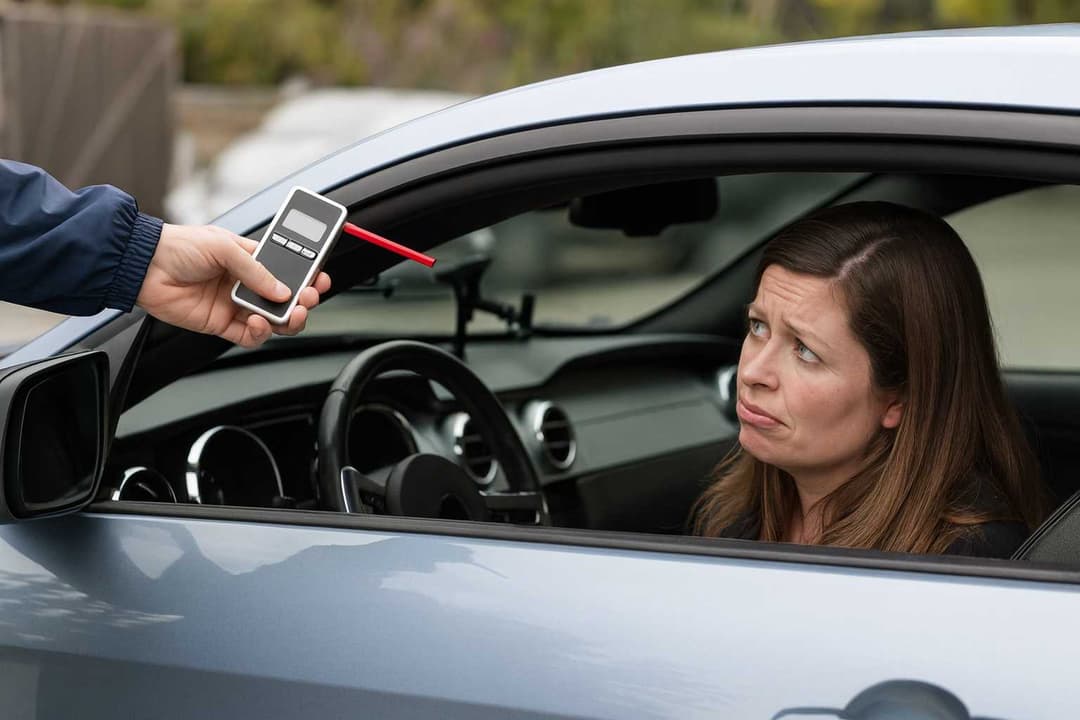
The portable breath test (PBT) administered at the roadside is different from the evidentiary breath test at the station. In Alaska, refusing the PBT does not trigger the criminal refusal statute — that penalty attaches only to the evidentiary test after arrest. However, refusing the PBT will not prevent your arrest and may prompt the officer to arrest based on the field sobriety tests alone.
What is the difference between DUI and OUI in Alaska?
Alaska uses "driving under the influence" (DUI) and "operating under the influence" (OUI) somewhat interchangeably. The statutory term in AS 28.35.030 is "operating" a motor vehicle, aircraft, or watercraft. Alaska does not use the OWI or DWI labels seen in some other states. All three refer to the same conduct.
Can I get a DUI expunged in Alaska?
Alaska does not have a general expungement statute for criminal convictions. Once convicted of a DUI, the record remains on your criminal history indefinitely. Alaska law does provide a limited procedure to seal certain records under AS 12.62.180, but eligibility is narrow. This is one reason why fighting a DUI aggressively — rather than pleading guilty to the first offer — is so important.
What is ASAP and why does it matter?
The Alaska Alcohol Safety Action Program (ASAP) is a state-mandated program that screens DUI offenders for alcohol and substance abuse and monitors compliance with any recommended treatment. Every DUI conviction requires enrollment in ASAP. Failure to complete ASAP requirements can trigger a probation violation, extended license revocation, and additional jail time.
Can a passenger be charged with DUI in Alaska?
A passenger cannot be charged with DUI unless the State can prove the passenger was actually operating the vehicle. "Operating" is broadly defined and can include starting the engine, sitting in the driver's seat with the keys in the ignition, or otherwise having physical control of the vehicle. Facts matter — an experienced Alaska DUI lawyer will scrutinize what the officer actually observed.
How does an out-of-state DUI affect my Alaska license?
Alaska is a member of the Interstate Driver License Compact, which means a DUI conviction in another compact state will be reported to Alaska and treated as if it occurred here. The Alaska DMV will revoke or suspend the license accordingly. This also means an out-of-state conviction counts as a prior for Alaska enhancement purposes.
What happens if I was under 21 at the time of the DUI?
Alaska has a zero-tolerance law for drivers under 21. Any measurable alcohol in the blood of a driver under 21 is a violation under AS 28.35.280 and triggers administrative license actions. If the reading is 0.08 or higher, the driver is also charged under the adult DUI statute. Underage DUI carries additional consequences including possible loss of federal financial aid eligibility.
Can I fight the DUI while still keeping my job driving?
A timely DMV hearing request extends the temporary driving permit until the hearing decision, which can preserve driving privileges for months. After a revocation begins, a limited license may be available under AS 28.15.201 for employment purposes if the driver installs an IID, files SR-22 insurance, and completes ASAP intake. CDL holders cannot obtain a limited CDL under federal law.
Does BFQ Law handle DUIs outside Anchorage?
Yes. Our Anchorage office serves the Third Judicial District (Anchorage, Mat-Su, Kenai, Homer, Kodiak, Valdez, and surrounding communities) and represents clients in the Second and Fourth Judicial Districts on a case-by-case basis. Learn more about our criminal defense attorneys and our firm.
Conclusion
Two clocks, one arrest. An Alaska DUI arrest sets two independent legal proceedings in motion — the criminal case under AS 28.35.030 and the DMV administrative revocation under AS 28.15.165. The DMV clock is faster, running out in seven calendar days, and drivers who wait until arraignment to hire counsel have often already forfeited their strongest chance to preserve their license.
Get the framework right. The graduated penalties in Alaska's DUI statute mean that how a first offense is resolved will shape the sentence on any future offense. Ignition interlock timelines, limited license eligibility, CDL disqualification, and JBER on-base driving privileges each carry their own rules that a general practitioner may not appreciate. Working with counsel who handles Alaska DUI cases regularly is the difference between a resolution that lets you keep your job and one that closes doors for years.
Contact BFQ Law Alaska
If you or a family member has been arrested for driving under the influence in Anchorage, JBER, Wasilla, Palmer, the Kenai Peninsula, or anywhere in Alaska, reach BFQ Law Alaska through our contact page or by emailing secretary@BFQLaw.com. Our criminal defense department, led by Eric Burkett, handles Alaska DUI matters from the initial DMV filing through trial and appeal.
Address: 550 W. 8th Ave, Anchorage, AK 99501. Practice areas served from our Anchorage office include criminal defense, personal injury, family law, wills, trusts & estates, and civil litigation.
Need Legal Help?
If you have questions about criminal defense or need legal representation, contact BFQ today for a free consultation.
Schedule Free ConsultationLearn more about our Criminal Defense practice.